


How we put load on our fingers matters: especially as it comes to a task we do 8+ hours a day. Olympic-level durations, even. Many of us think about wrist health in terms of posture and force. Our biomechanics research paper we’re discussing today suggests how we use our fingers may matter just as much. Can two tasks using the same force stress the wrist differently?
In broad strokes, the study tested the impact of pressing vs pinching. We’re looking at the same level of force in the same posture. While the force remained the same, direct measurements were made of the pressure of the carpal tunnel. With a catheter. Pour one out for the folks that participated in the study and maybe were not fans of needles sticking out of their wrist. (Yes, I am a wuss when I donate blood and look away from the needle jab…>.>)
The contact pressures between tendons, the median nerve and the flexor retinaculum (basically, a fibrous band that covers the carpal bones) may also contribute to the pressure buildup that precedes a diagnosis of Carpal Tunnel Syndrome (CTS). Maybe a bit like trying to fit too much into a suitcase, except the suitcase can more visibly protest the overload.
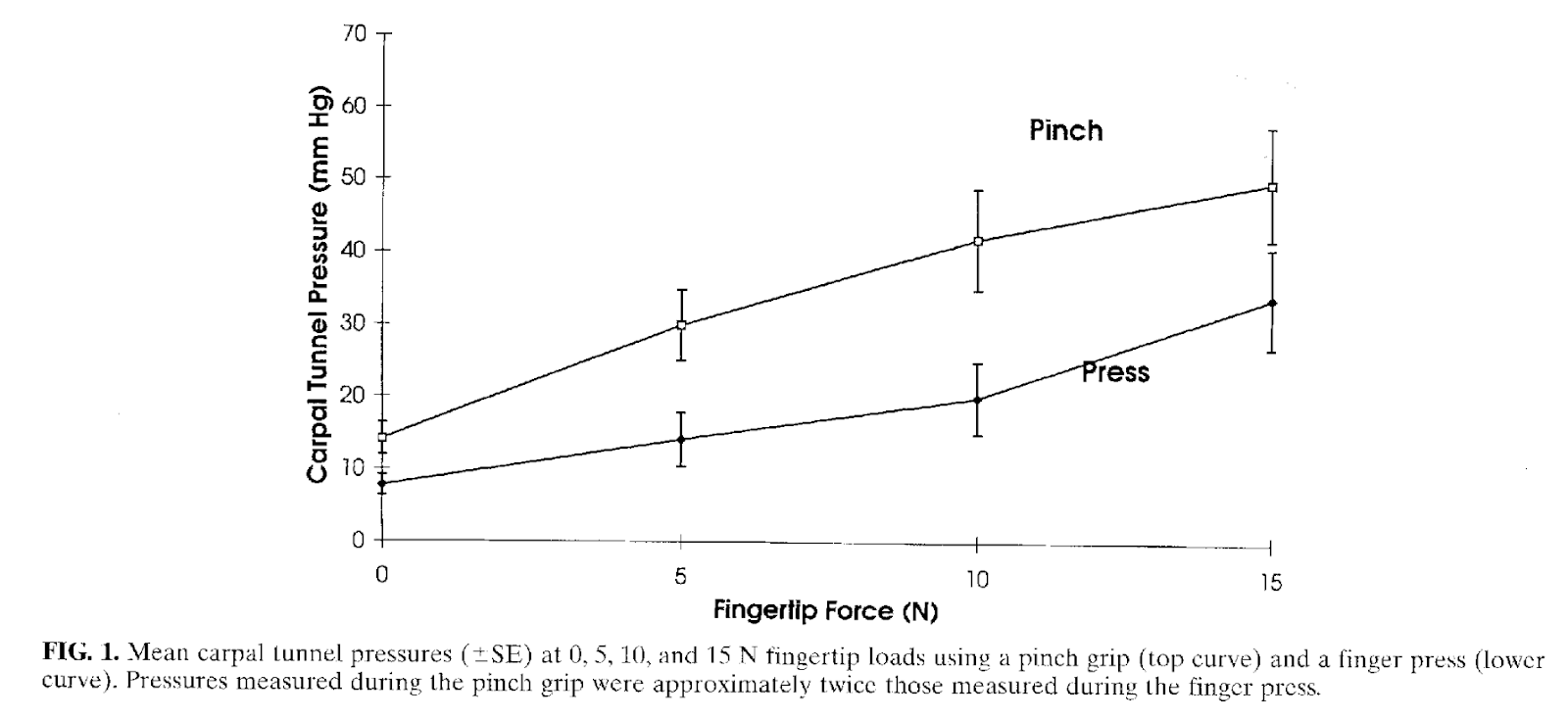
Increased pressure within the carpal tunnel has been shown to cause or aggravate symptoms of carpal tunnel syndrome (CTS). 30mmHg or more indicates pressure levels that create changes in the nerves of the wrist. With pinch force indicating it easily makes the pressure jump, the researchers have “again shown that the level of force exerted at the fingertips has a significant effect on carpal tunnel pressure.” Additionally, “use of the thumb in the pinch grip substantially increases the pressure in the carpal tunnel.” Ouch. The thumb is also a culprit of increasing our chances for wrist injury, not just our longer phalanges that tend to do most of our typing work. If you might be having trouble with the work your thumb is doing, it is worth considering how you layout your modifiers.
An earlier study was looking at static loading on fingertip loading too (reference 18). That study noted higher pressures than this study, and the evidence seems to point toward the “...differences in forearm posture.” Hm, sounds a bit familiar doesn’t it? If you read the blog post from January, this paper was used as a reference in “Guidelines for Wrist Posture Based on Carpal Tunnel Pressure Thresholds” among many others. This study goes further in the discussion saying, “...In the earlier study. the forearm was fully pronated, whereas in this study the forearm was pronated to approximately 45°. Carpal tunnel pressure at 45° of pronation is lower than at full pronation (18,25).”
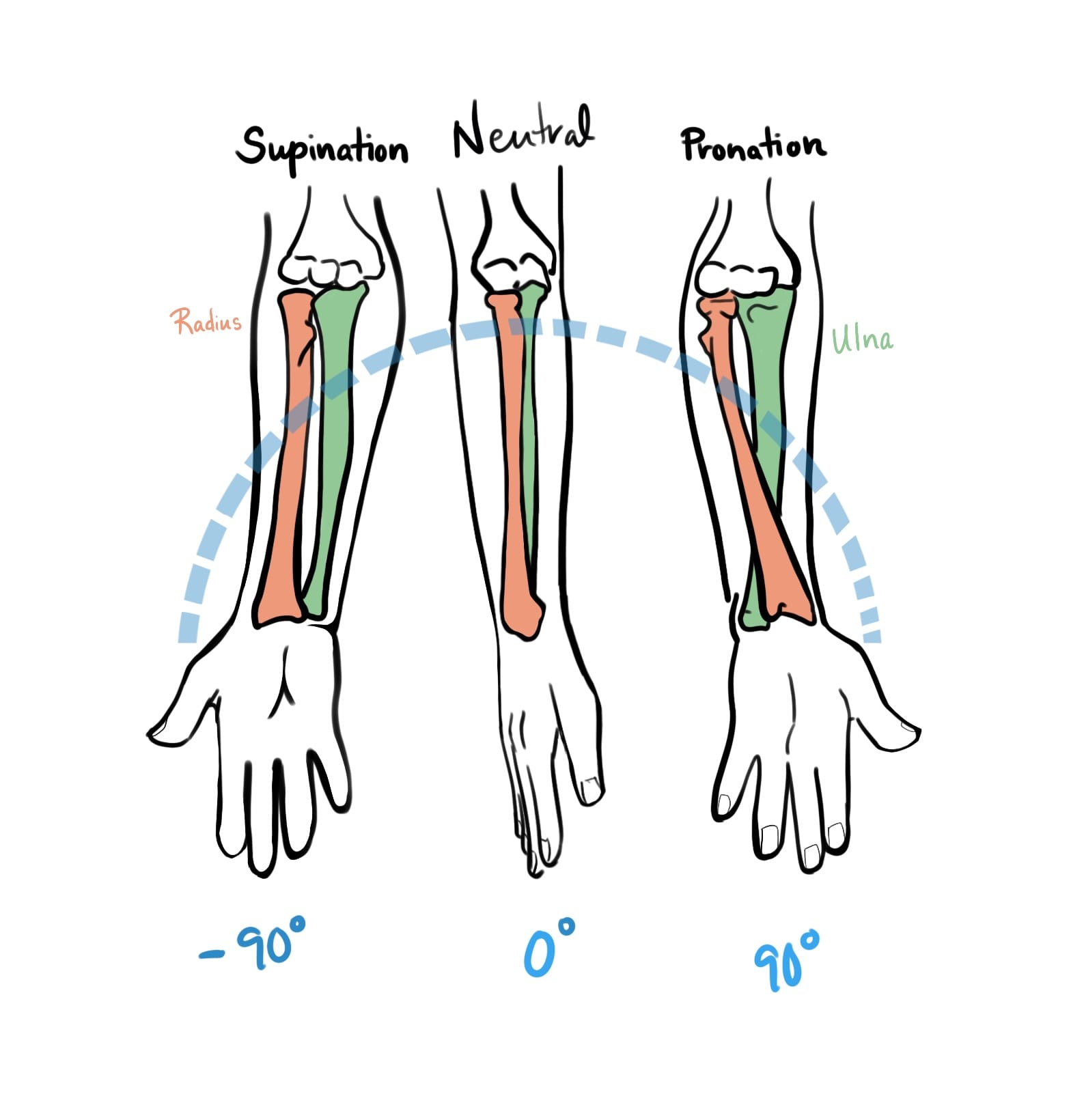
On top of this, sometimes it can seem like a wrist injury has appeared out of the blue, unexpected. You don’t feel like you’ve exerted your fingers with anything, yet you may see symptoms. The force you are exerting is not synonymous with the load inside your carpal tunnel. Take this as a gentle reminder that taking breaks from typing is important, but so are your habits in your posture.
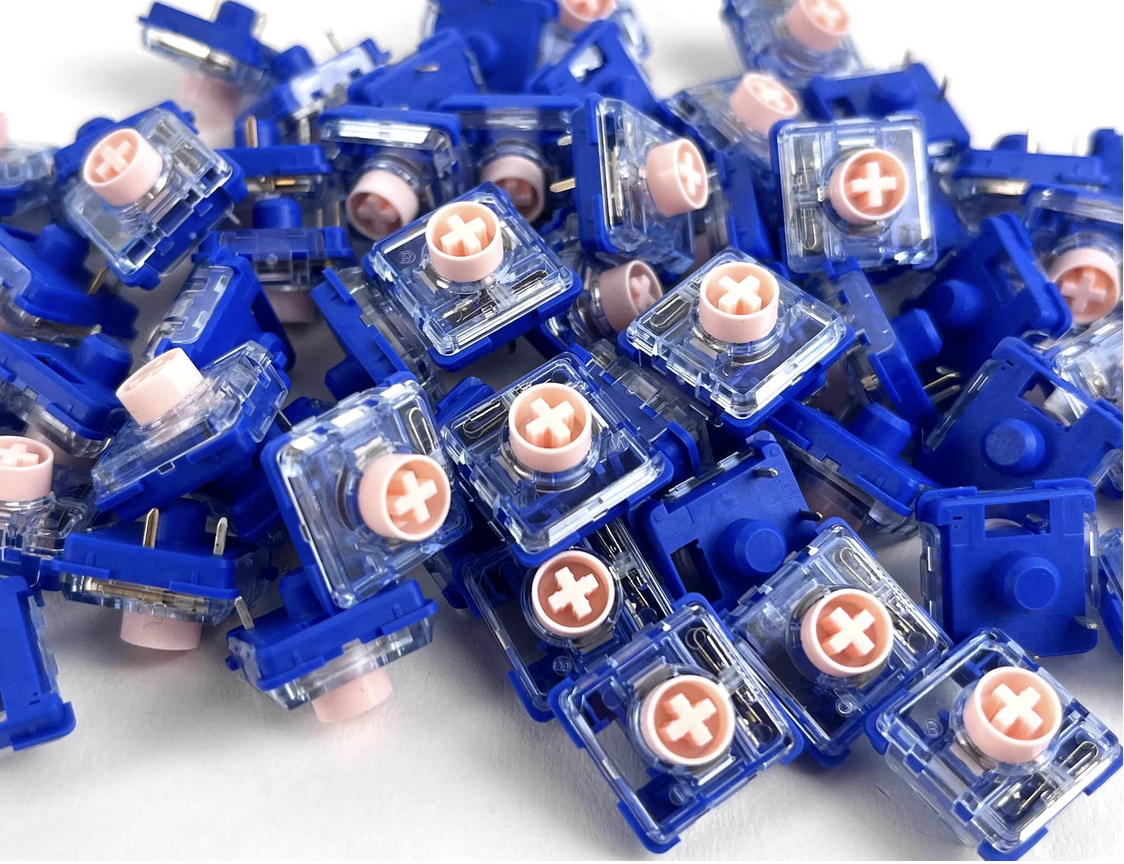
An easy way we’ve found to get your hands closer to a lower force is using the Kailh Pink Islands switches at 35 grams of force, which is lighter than most of the other Kailh V2 switches by about 15 grams of force. A gentle press can still give you all the actuation you need. By giving your hands the consideration they need, you’ll be proactively preventing what we know contributes to wrist injuries.
Citation:
Member discussion