


Our wrists are closely connected to our hands, so of course we think about them regarding office ergonomics. But what about our neck and shoulders?
Most folks that review our keyboards note that using our keyboard alleviated wrist pain, but there are some too that mention that their neck or shoulder pain saw relief using our split keyboards. I had in mind the existence of the ‘perfect setup’ which might vary a bit from person to person - but this 1-year study on thousands of computer workers changed that perspective.
What was measured?
Into the stew pot of this research goes weekly mouse and computer hours, neck pain, and right shoulder pain. Additionally, the researchers measured self-reported moderate-to-severe pain and clinically confirmed diagnoses. More specifically, 3 flavors of pain:
- Tension neck syndrome. Defined by the study as “...pain and stiffness in the neck with palpation tenderness in the trapezius muscle on physical examination…”
- Right-sided rotator cuff syndrome. Defined by the study as “...pain in the deltoid region of the upper arm on interview, a positive impingement test, and pain on resisted shoulder abduction, external rotation or internal rotation…”
- Right shoulder myalgia, given the definition of “...substantial palpation tenderness in the trapezius muscle, the levator muscle of the scapula, or the supraspinous or infraspinous muscle.”
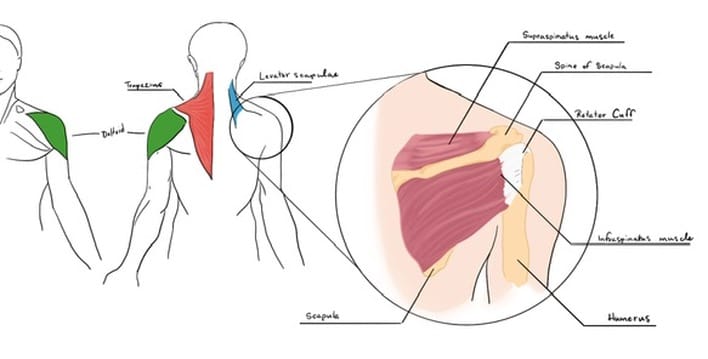
I know, they’re leaving out our good friends who use their left arm! So rude. Maybe a future study will quantify that for us. The researchers also gathered information on the ergonomics of the workers setups: mouse and keyboard positions and chair adjustment. In a fun new twist, this study also asked about personal and work characteristics, like job demands, social network, and freedom within their work role. On an amusing note, “personal traits” among which was “Type A.” Kid you not, please have a screen capture of that segment of the paper below:

Thanks, page 401. I needed a good chuckle while reading…
What'd they find?
Of the mouse, keyboard, and chair… which was the one of the biggest culprits?
…The mouse was consistently associated with neck and right shoulder pain, per the study. The results are notably higher at 20-30+ hours a week. While the study does not have any attractive charts, there is a very nice table where they share that data with us.

Higher mouse hours show a clear upward pattern. The important note here is that there was no magical “safe” number of hours. Risk increased steadily.
But what about the keyboard? I hear you asking. They have a lovely bit of the table dedicated to our friend the keyboard as well.
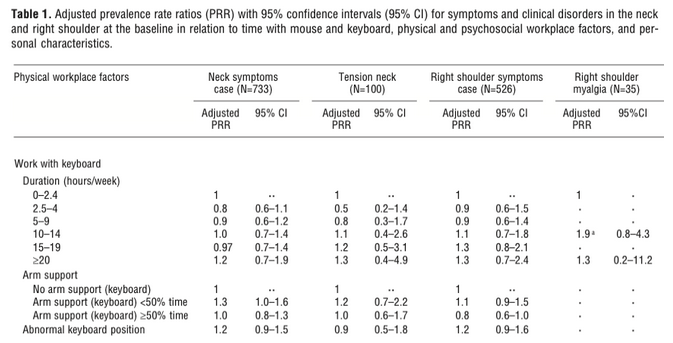
Our dear friend the keyboard is not necessarily innocent; more than 15 hours/week was linked to higher risk of new neck and shoulder pain at follow-up.
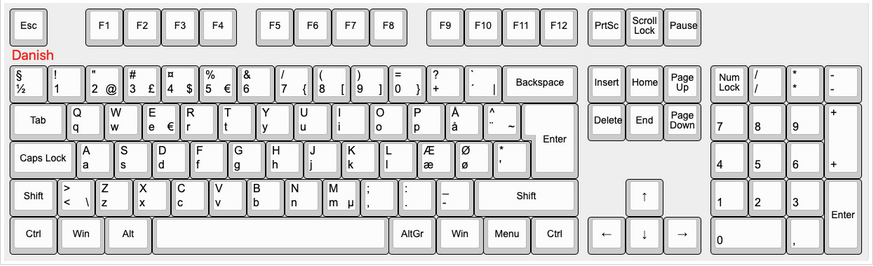
But what KIND of keyboard was it? I wonder that too, and it’s not defined by the paper, unfortunately. I’d presume that it’s a horizontal stagger 100% QWERTY keyboard as that is considered the standard, with the caveat of the study focusing on Danish folks. I did find someone who compared the USA, UK, and Danish keyboard forms. You can see the difference from what you type on to what may be common in Denmark:
And you might ask, what definition got used for abnormal keyboard positioning? “An abnormal keyboard position was defined as the center of the keyboard positioned to the left or the right of the trunk.” The “trunk” is used twice in this paragraph but nowhere else in the essay (unless both my eyes AND the search tool betray me) so I would make the educated guess they’re referring to the human torso with their term.
While it’d be nice to have a neat and tidy answer to things, it looks like total load has stronger importance than micro-position details.
More Than Wrists
You already knew about Carpal Tunnel Syndrome load, and now this paper has evidence that shoulder and neck load increase with sustained input device use. So while there’s no indicated ‘safe threshold’ in this study, it’s best to be aware that the body responds to total accumulated load, not a single tipping point.
Taking breaks matters! And making the time investment into physical movement outside of keyboard/computer time seems very worth your time.
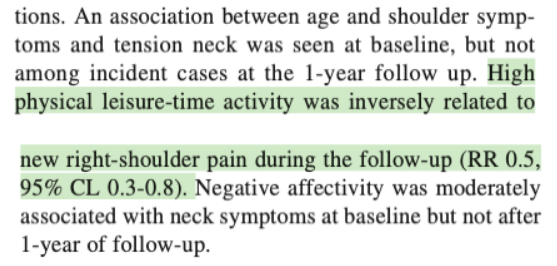
While accumulation of load is unavoidable, we can slow down that accumulation by using a split keyboard and making sure we're comfy with our setup!
Paper citation: "Neck and shoulder symptoms and disorders among Danish computer workers"
Member discussion